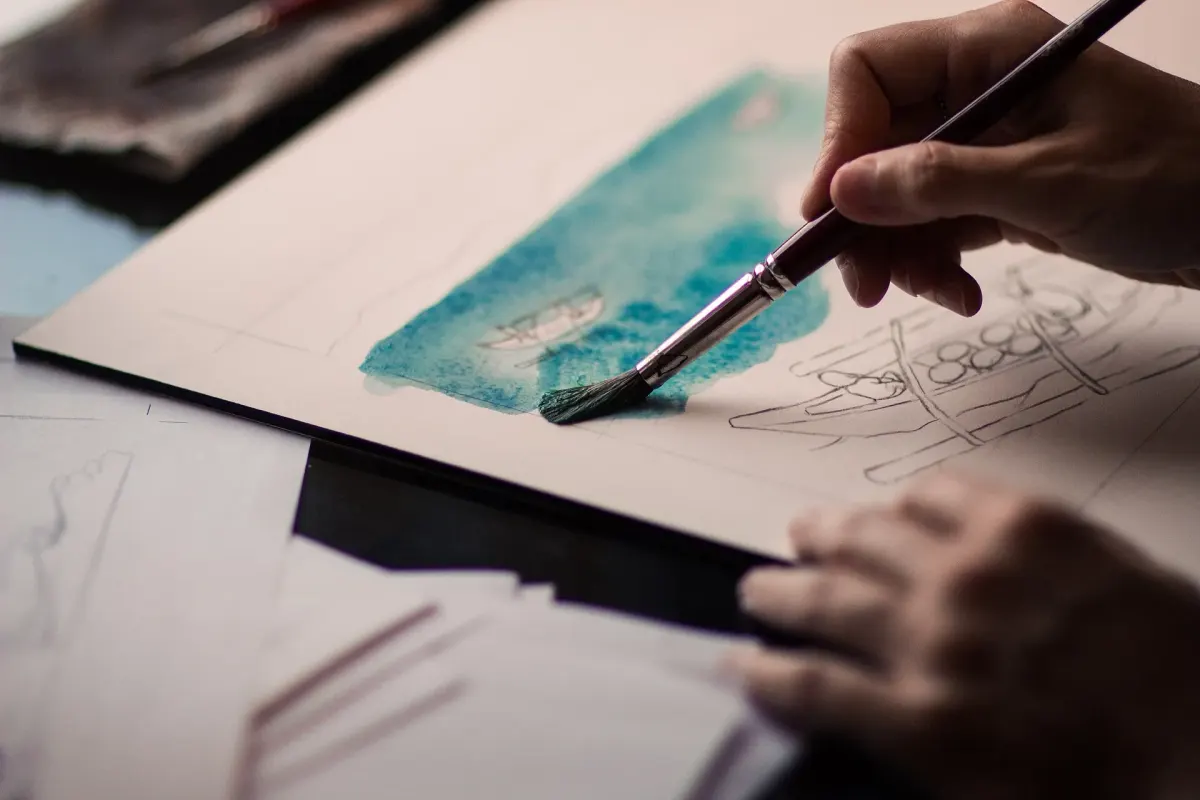
The photograph shows something that is easy to overlook: soft light falling across the paper from the side, with the hand and brush casting only a gentle shadow. That is very close to what a good drawing table should give you, and it is not hard to arrange.
Most people buy a bright lamp and point it straight down. It feels sensible and works badly. The light bounces off the paper into your eyes, it flattens the texture, and your own hand blocks it right where you are working.
Aim the light from the side
Place the main light on the side opposite your drawing hand, a little forward of the paper. If you are right-handed, that means the lamp sits to your left. Your hand then works in the light rather than blocking it.
Side light also shows the grain of the paper and the edge of a wet wash, so you can judge when a layer is damp or dry. A flat overhead light hides both.
Keep the colour honest
If you mix colour, the bulb matters. Very warm or very cool light shifts what you see on the palette, and a painting that looks right at night can look strange the next morning. Choose a neutral white bulb, and when you can, finish important work in daylight from a window.
- Put the table beside a window if you can, not facing it
- Add a lamp with a neutral white bulb for evenings
- Use the same two sources every time so your eye stays calibrated
Consistency does more than any single piece of equipment. After a few weeks you will know exactly how your colours should look under your own light.