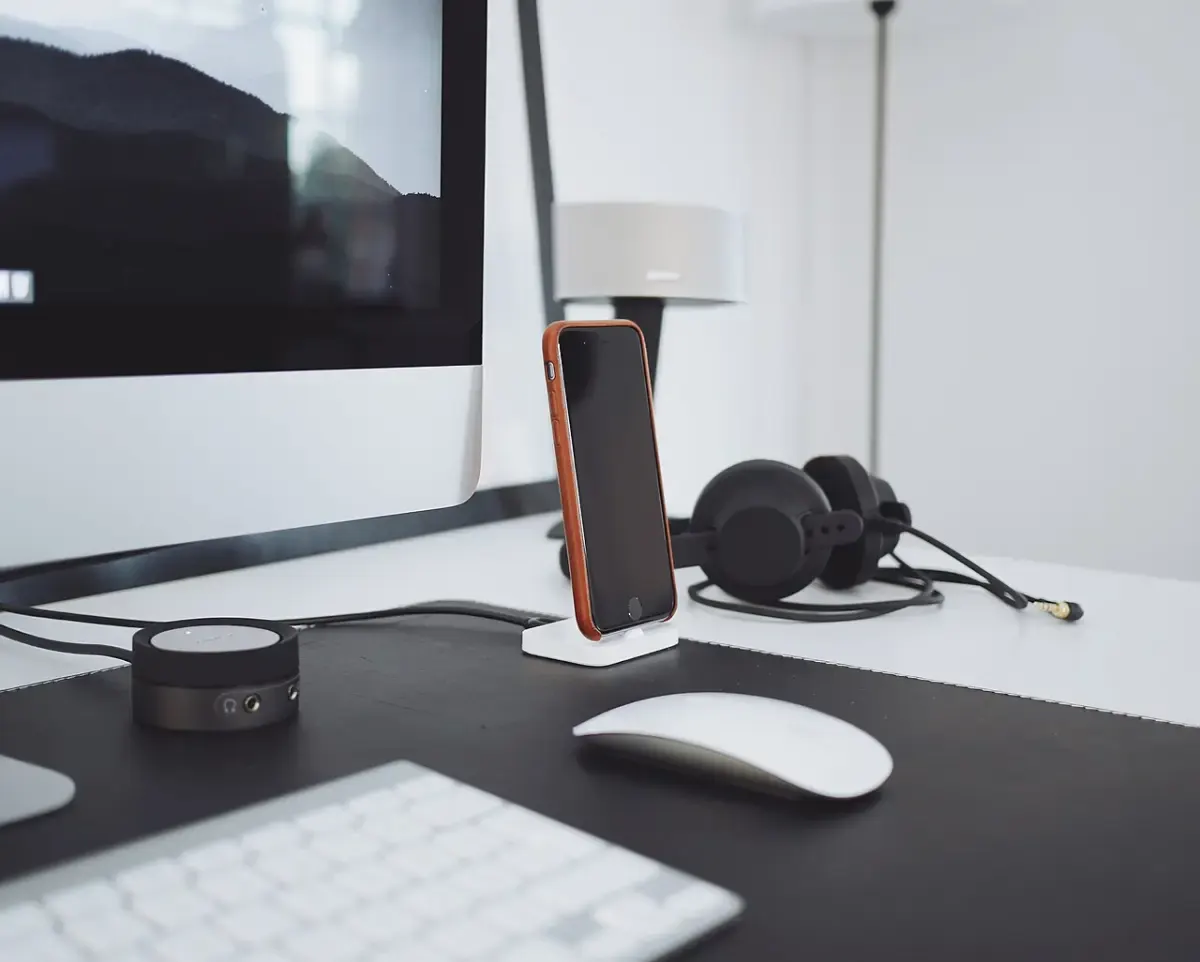
The desk in the photo belongs to someone who works partly on a screen, and that is worth saying plainly. Most people who draw today also scan, photograph, reference and file their work on a computer. A good drawing desk has to make room for both worlds without letting one swallow the other.
We start every desk the same way: clear it, then bring back only what earns its place. The monitor stays, because we check colour and crop scans on it. The phone sits upright on a dock, because it doubles as a timer and a camera. The headphones live on the desk rather than in a drawer, because a drawer is where good habits go to die. Everything else goes back in a box until it is asked for.
The desk mat does more than it looks
The dark mat in front of the keyboard is the quiet hero of this setup. It gives the mouse a steady surface, it protects the desk from pencil and ink, and it marks out a working zone that your eye learns to respect. When the mat is clear, you are ready. When it is covered, you tidy first.
For drawing, we like a mat large enough to hold a sketchbook open beside the keyboard. If you have to move the keyboard to draw, you will eventually stop drawing.
What lives within arm's reach
We keep a short list of things that never leave the desk. The rest is stored one step away, which is far enough to keep the desk calm and near enough that nothing feels like a chore to fetch.
- One sketchbook, open or ready to open, with a pencil resting on it
- A jar for the three or four brushes you reach for every day
- A cloth for wiping hands and brush handles
- A water pot with a lid, if you paint at the desk at all
- A lamp you can aim, not just switch on
That last item matters more than it seems. The lamp in the picture sits behind the phone and throws a soft, even glow along the wall. Aim yours from the side opposite your drawing hand so your arm does not cast a shadow over the line you are making.
A screen is a tool, not a habit
Put the screen to one side of the sketchbook, never in front of it. You should have to turn your head to check a reference, and turn it back to make a mark.
That small turn is a useful pause. It stops you copying the reference line for line and encourages you to hold the image in your head for a moment, which is where interpretation begins. If your screen faces you directly, it will always win the contest for your attention.
Reset at the end of the day
The real secret is the last two minutes of a session. Wipe the brushes, close the sketchbook, put the lid on the water, and leave the mat clear. Tomorrow's version of you will sit down to an empty, inviting surface and begin without negotiating.
It is a small ritual, and it costs almost nothing. In our own workshop, it is the one habit we would keep if we had to drop all the others.