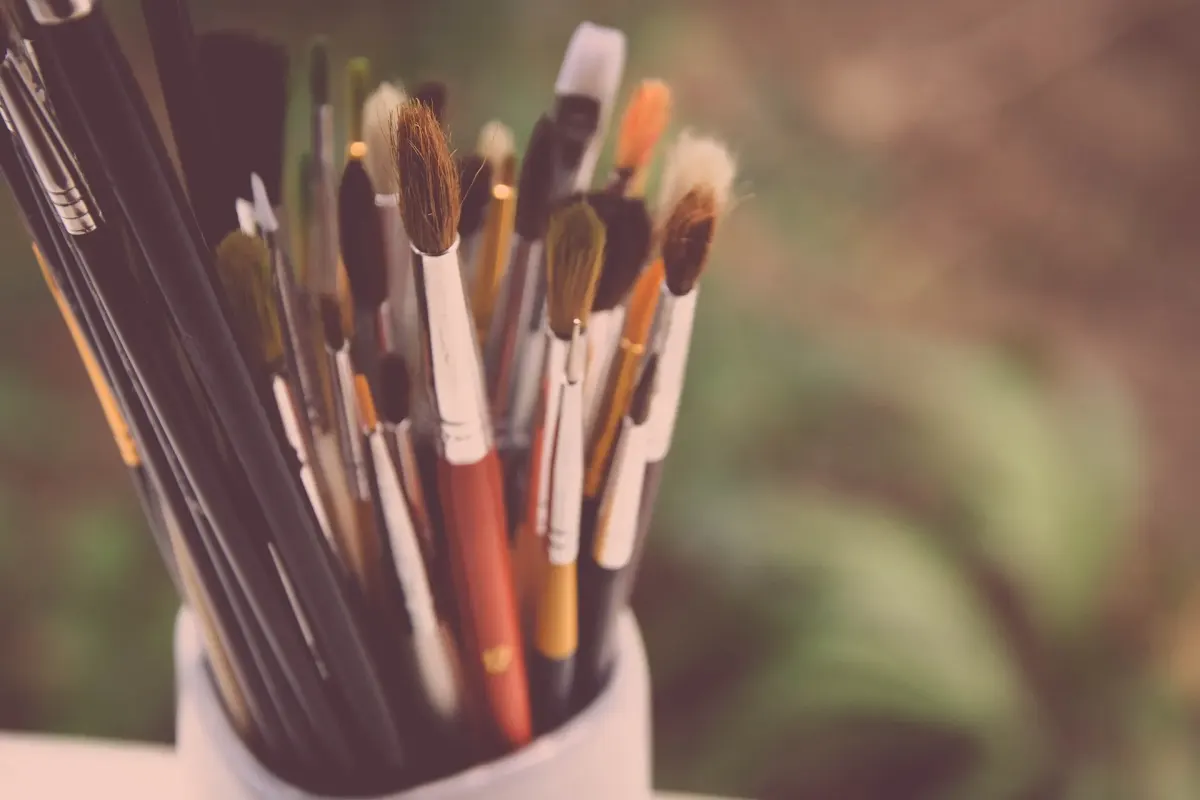
The brushes in this photograph are a mixed bunch, as most pots become over time. Some come to a point, some are broad and square, and a few are somewhere in between. If you are starting from nothing, it helps to know that two shapes do most of the work.
A round brush has a belly that tapers to a point. A flat brush has a straight edge and a square or slightly slanted end.
Start with a round
A medium round does nearly everything. Use the side for a broad stroke, the tip for a fine line, and anything in between by changing the pressure. It is the one brush you can learn the whole language of mark-making with.
Choose a size that fits your paper. For a sketchbook page, a medium size feels natural. For small studies, a size down is easier to control.
Add a flat for edges and washes
A flat is the next brush to add. It gives you clean straight edges, even washes and crisp architectural lines, and it holds a good load of paint. It is less forgiving for fine detail, which is why we recommend it second.
Whatever shape you choose, hold it in your hand before you buy it, if you can. A brush should feel balanced, with a handle you can grip comfortably for an hour.