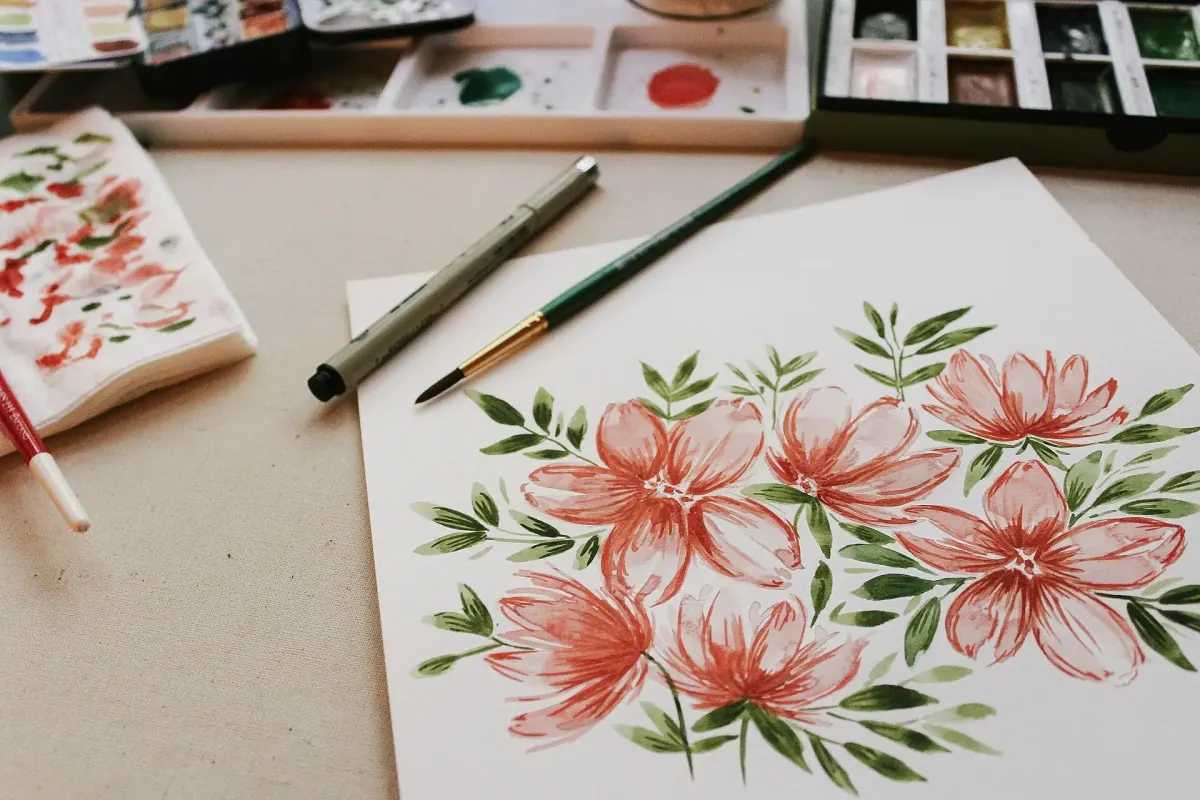
The painting in the photograph sits flat and clean on its sheet, with soft edges where the water ran and no sign that the paper has given up. That is not luck. It is partly the paper, and weight is the first thing to understand about it.
Paper weight is measured in grams per square metre, written gsm. It tells you how thick and absorbent a sheet is, and so how much water it can take before it ripples.
The weights in practice
Around 190 gsm is light. It works for dry studies and light washes, but it will buckle quickly if you wet it generously. Around 300 gsm is the usual choice for watercolour, thick enough to take several washes with only a little ripple. A heavy paper, around 640 gsm, behaves almost like card and can usually be used without stretching.
Heavier paper costs more and makes a thicker book, so it is a trade-off, not a rule. Pick the weight that matches how wet you paint.
What to check before you buy
Weight is only half the story. Look for paper that is labelled for watercolour, and decide whether you want a smooth or a textured surface. A rougher surface holds pigment in its grain and gives a lively edge, while a smooth one suits fine detail.
If you are unsure, try a small pad of 300 gsm and see how your own wet washes behave. Our workshop is happy to suggest a sketchbook for your style.